
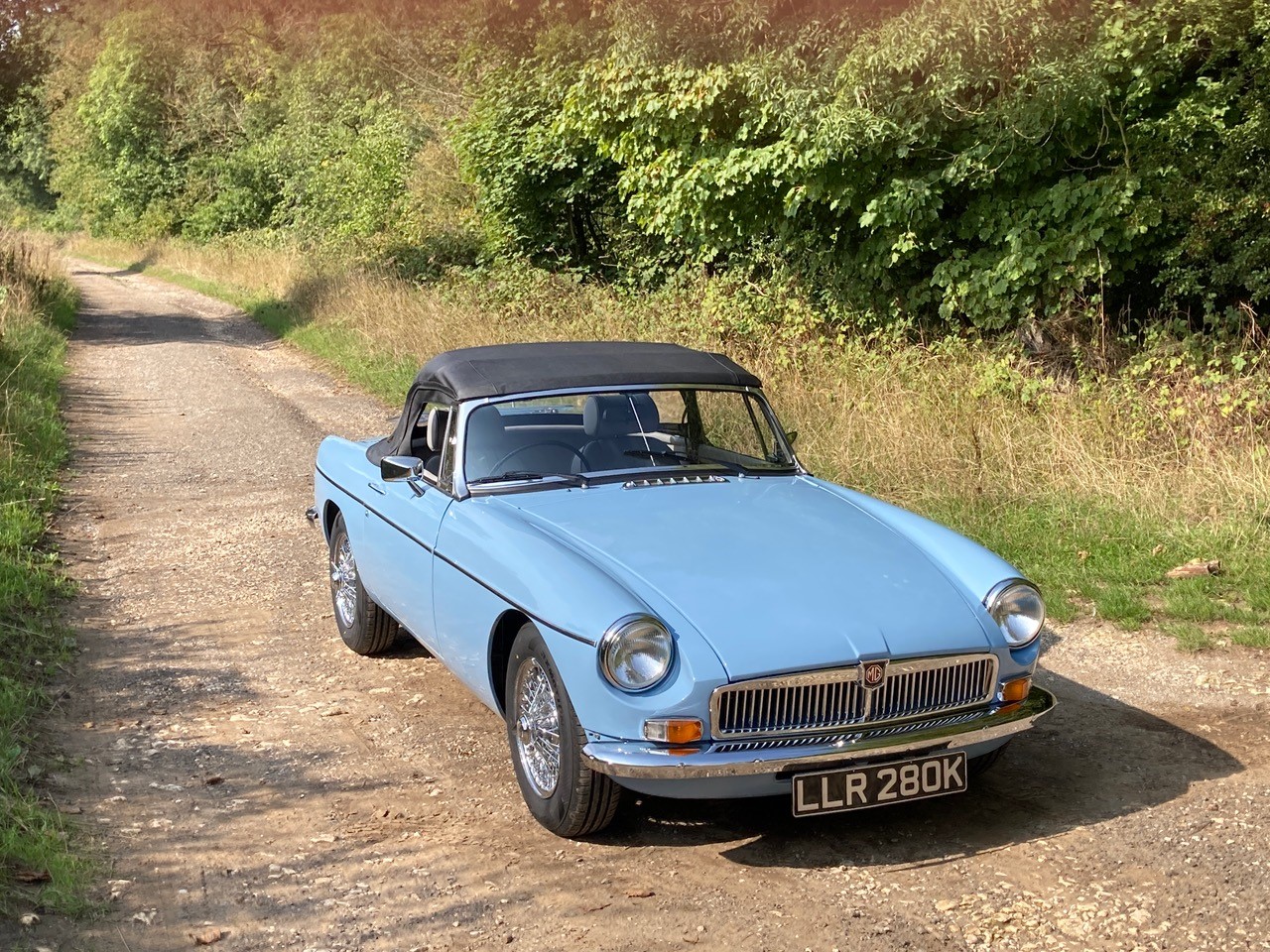
Buying an MGB can be a rewarding way to enter classic car ownership, but the right car is rarely determined by its paint colour or the length of its MOT history alone. Condition, previous repairs, specification and the quality of maintenance all deserve careful attention. Two cars of the same age can offer very different ownership experiences.
The MGB was produced in several forms and developed over time, so it is worth deciding what you want from the car before arranging viewings. An open Roadster offers a traditional sports-car experience, while the GT provides a fixed roof, a different driving character and useful additional luggage space. Neither is automatically the better choice. The best MGB is the one that suits the way you intend to use it and has been maintained to a standard you can understand and support.
Start by choosing the right MGB
Although all MGBs share a familiar design, there are meaningful differences between versions. Early cars appeal to buyers who value period appearance and a more traditional specification. Later examples may offer changes to trim, equipment or mechanical components. The GT has its distinctive fastback body, while the Roadster has a folding hood and an open cabin.
Consider how often the car will be used, where it will be stored and whether you expect to take passengers or luggage on longer journeys. A Roadster may be the natural choice for relaxed summer driving, but its hood, frame and seals need to be examined carefully. A GT can be more practical for touring, although its additional glass, trim and tailgate also need inspection.
It is helpful to make a short list of priorities before viewing cars. These might include originality, long-distance usability, a particular engine or gearbox configuration, the quality of a restoration, or simply a sound and usable car. Being clear about priorities makes it easier to compare cars objectively rather than becoming attached to the first example that looks attractive.
Inspect the bodywork before the mechanical details
Rust and previous corrosion repairs are among the most important areas to investigate on an MGB. A clean-looking exterior does not necessarily mean that the structure underneath is sound. Fresh paint can conceal repairs, while a car with older paint may provide a more honest view of its condition.
Look closely at the sills, door bottoms, front and rear wings, wheelarches and the areas around the windscreen. On a Roadster, inspect the inner structure around the hood frame and windscreen carefully. On a GT, pay attention to the tailgate aperture, roof gutters and areas where water may collect or enter.
The sills deserve particular attention because they contribute to the car's structural strength. A repair that looks tidy from the outside may not tell you how much original metal remains or whether the internal sections were repaired properly. Ask whether photographs or invoices exist from major welding work. If access allows, inspect underneath the car rather than relying solely on a description.
Check that doors, bonnet, boot or tailgate and panels open and close without excessive force. Uneven gaps do not prove that a car has been damaged, but they may indicate previous panel replacement, corrosion or poor alignment. Look for differences in texture, colour and finish between panels, and inspect the underside of the wings and floor where possible.
A magnet can sometimes help identify areas of heavy filler, but it is not a substitute for experience or a proper inspection. If you are unsure about structural condition, arrange an independent assessment before agreeing to buy.
Look beyond the paint
Paintwork should be judged in the context of the whole car. A high-gloss finish can be attractive, but it may also make it more difficult to see older repairs. Examine reflections along the sides of the car for ripples, and look for overspray on rubber seals, brightwork and suspension components.
Check the condition of the chrome, rubber seals, glass and lights. Replacement trim can be costly or time-consuming to source, particularly when several small items are missing. A cracked windscreen, perished seal or damaged hood may not prevent a purchase, but each item should be reflected in your assessment of the work required.
Assess the engine and cooling system
Ask to see the engine started from cold. A seller who has already warmed the car may have a reasonable explanation, but a cold start gives you more information about starting behaviour, smoke and initial oil pressure. Do not touch hot components without permission; instead, agree in advance that the car will be available to inspect cold.
Listen for unusual knocks, rattles or persistent tapping. Some mechanical noise can be characteristic of an older engine, but changes in noise as the engine warms deserve attention. Observe the exhaust after start-up and under gentle acceleration. Smoke can have several causes, and colour alone does not provide a complete diagnosis, so treat it as a reason for further investigation rather than a definite verdict.
Inspect for oil or coolant leaks around the engine, radiator, hoses, water pump and heater connections. Look at the condition of the cooling system and ask about previous overheating. A clean engine bay is not proof of mechanical health, just as a little age-related grime does not automatically mean the engine is poor.
During a test drive, check that the engine pulls cleanly through its rev range and that the temperature remains stable. Any warning light behaviour should be understood before purchase. If the car has been modified, ask what work was carried out and whether supporting receipts or technical information are available.
Check the gearbox, clutch, brakes and suspension
The gearbox should engage each gear without excessive resistance, graunching or jumping out under load. Test it when the car is cold and once it has warmed up. A worn clutch may slip under acceleration or make gear selection difficult, while a dragging clutch can affect reverse and first gear.
On a quiet road, listen for humming, whining or clunks from the transmission and rear axle. Pay attention to vibration through the steering wheel, gear lever or seat. These symptoms can have several possible causes, including worn components, incorrect adjustment or wheel and tyre problems.
Test the brakes progressively and in a safe location. The car should slow in a controlled manner without pulling sharply to one side. A soft pedal, excessive travel or judder should not be ignored. Inspect the brake pipes, hoses, discs or drums and evidence of leaks where practical.
The steering should feel reasonably consistent, with no alarming play or wandering. Listen for knocks over uneven surfaces and examine the condition of bushes, dampers, springs and kingpins. Tyres should be checked for age, cracking, uneven wear and correct size, not just tread depth. A classic car can pass a basic road test while still requiring substantial suspension or steering work.
Review the interior and electrical equipment
The cabin often reveals how an MGB has been used and stored. Inspect the seats, carpets, dashboard, door cards and hood or headlining. Damp smells, staining or wet carpets may indicate leaks, blocked drainage routes or corrosion. Lift carpets where possible and look for repairs to the floor.
Test every electrical item you can: lights, indicators, gauges, horn, heater fan, wipers, washers and interior lighting. Check that the charging warning light behaves correctly and ask whether any electrical modifications have been made. Non-standard wiring should be neatly installed, protected and understandable. Untidy additions can create reliability and safety concerns later.
Do not assume that an attractive retrim or modern accessory means the car has been comprehensively restored. Cosmetic work may be entirely appropriate, but it should be considered separately from structural, mechanical and electrical condition.
Use the history intelligently
Paperwork is most useful when it supports what you can see on the car. Look for invoices, workshop reports, parts receipts, photographs and records of body or engine work. A folder containing evidence of regular maintenance can be more useful than a brief list of vague claims.
Check that the vehicle identification details correspond with the available documents. Ask about the number of previous owners, how long the current owner has had the car and how it has been stored. If the car has been restored, find out what was done, when it was completed and whether the restoration was cosmetic, mechanical or comprehensive.
When considering a car that has been rebuilt or modified, ask for a clear specification. The MGB rebuild specification page is a useful place to understand the kind of information a detailed build description can provide, although every individual car should still be assessed on its own evidence.
Take a measured test drive
A test drive should not be treated as a quick demonstration. Allow time for the car to start, warm up and operate in different conditions. Try the clutch, gearbox, steering and brakes progressively, and listen for changes as speed and engine temperature increase.
Consider whether the driving position suits you and whether the hood, doors, windows and luggage area meet your needs. A car can be mechanically sound yet unsuitable for the journeys you have planned. If you are unfamiliar with older vehicles, take an experienced MGB enthusiast or arrange an inspection with a suitable specialist.
Plan for ownership after the purchase
Every classic car benefits from regular checks, even when it is not used frequently. Before driving an MGB regularly, establish a sensible maintenance routine covering fluid levels, tyre pressures, battery condition, belts, hoses, lights and visible leaks. Keep records of work carried out so that future diagnosis is easier.
Think about storage, security, tools, spare parts and access to knowledgeable support. It is also wise to budget for gradual improvements rather than assuming that one major repair will make the car permanently trouble-free. Older vehicles may need adjustment and inspection as part of normal ownership.
If you are comparing cars for sale, reviewing current MGB stock can help you see how different specifications and presentations are described. Previous examples in the sold cars archive may also provide useful context when considering how individual cars have been presented, although availability and condition always change.
Buy the car, not just the story
The most dependable buying decision comes from combining a clear idea of your needs with a careful inspection of the actual vehicle. Look past polished photographs and enthusiastic descriptions. Check the structure, understand the mechanical condition, verify the paperwork and ask direct questions about repairs and modifications.
An MGB does not need to be perfect to be enjoyable. It does need to be understood. A car with honest condition, sensible maintenance and a history that can be followed is often easier to own than an apparently immaculate example with little supporting information. Take your time, obtain advice where necessary and choose the MGB that gives you confidence in its next chapter.
If you would like to discuss an MGB or arrange an enquiry, you can use the California Classics contact page.