
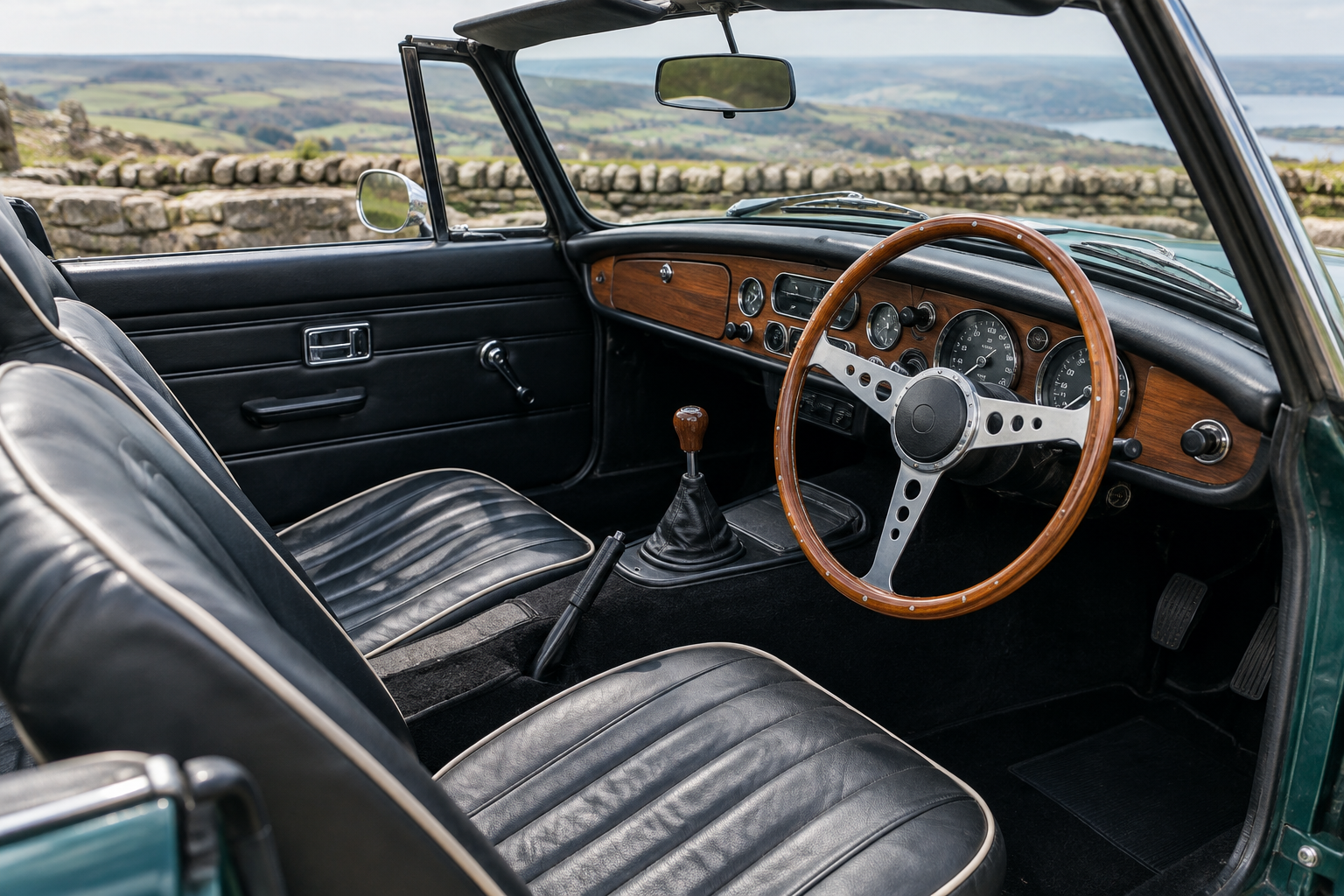
An MGB is experienced from the driver’s seat. The engine, gearbox and suspension matter, but so do the condition of the cabin, the quality of the hood and the way the controls feel in daily use. A well-kept interior can make an older car feel cared for and inviting, while neglected trim can turn every journey into a reminder of deferred maintenance.
Interior care is not simply a cosmetic exercise. Damp carpets may point to leaks, a stiff hood can be difficult to fit correctly, and loose trim can create rattles or interfere with safe operation of the controls. The best approach is to treat the cabin as part of the car’s mechanical and structural condition: inspect it carefully, clean it sympathetically and repair problems before they become more extensive.
Begin with a careful inspection
Before cleaning, remove loose items and inspect the cabin in good daylight. Look beneath the mats, around the seat mounts and along the lower edges of the trim. Note any signs of dampness, staining, musty odour or surface corrosion. If the carpets are wet, cleaning them without finding the source will only disguise the problem temporarily.
Check the condition of the seat frames and runners, making sure the seats move as intended and lock securely. Examine the seat covering for split seams, hardened material and repairs that may catch on clothing. Look at the dashboard for lifting veneer, cracks, loose instruments or switches that do not operate positively. The steering wheel, gear lever and handbrake are frequently touched, so their condition can tell you how the car has been used and maintained.
It is also worth checking the door cards, armrests and kick panels. Loose clips, missing screws and distorted boards are usually straightforward to address, but they can allow trim to move and generate persistent rattles. Keep a record of missing or damaged pieces before ordering replacements. MGB interiors vary by model, year and previous restoration work, so matching the existing specification is preferable to buying parts on appearance alone.
Cleaning seats and upholstery
Start with the least aggressive method. Vacuum fabric, vinyl and carpet thoroughly using a soft brush attachment, taking care around piping and stitched areas. A small detailing brush can remove dirt from seams, around seat runners and between the folds of the hood frame, but avoid scrubbing so hard that old material is weakened.
For vinyl upholstery, use a diluted, mild interior cleaner applied to a cloth rather than flooding the seat. Work in small sections and wipe away residue with a separate damp cloth. Strong solvents, abrasive creams and household products intended for other materials may remove colour, leave a slippery surface or damage the finish. Always test a hidden area first, particularly where the covering has already become brittle.
Cloth seats should be treated carefully because excessive moisture can soak into the padding and remain there. Use a suitable fabric cleaner sparingly, provide ventilation and allow the seat to dry fully before covering the car. If a seam has opened or the covering is pulling away from its backing, cleaning is unlikely to solve the underlying problem. A trim specialist may be able to repair the area before damage spreads.
Leather, where fitted, benefits from gentle cleaning followed by a product appropriate for older leather. The aim is to keep the material supple without leaving a greasy coating. Do not assume that a glossy finish means the surface is healthy; it may simply indicate product build-up. Cracked leather may require specialist restoration rather than repeated application of conditioner.
Looking after carpets and floor coverings
Carpets collect grit, moisture and small debris, particularly around the driver’s footwell. Remove them where possible and inspect both sides. Vacuum first, then clean with as little water as practical. Dry carpets completely before refitting them, and avoid placing damp material against the floor.
Pay attention to the edges and fasteners. A carpet that has shifted can obstruct pedals, catch on a seat runner or make it difficult to operate the footwell controls. Any additional mats should be secure and correctly sized. Avoid stacking loose mats, especially on the driver’s side.
If there is recurring dampness, investigate the roof, windscreen area, door seals, hood fit and drainage paths rather than relying on absorbent mats. Water can travel from one part of the cabin to another before appearing as a wet patch. Staining around the lower trim may therefore not identify the entry point. Persistent damp should be dealt with promptly because it can affect trim, fasteners and the floor structure.
Care of the dashboard and instruments
The dashboard should be cleaned with a soft, slightly damp cloth and dried immediately. Avoid spraying cleaner directly onto instruments, switches, vents or joints. Liquid can find its way behind the dashboard and create problems that are harder to diagnose than the original dirt.
Wood veneer, painted surfaces and textured vinyl each need a different approach. Do not polish a matt or textured finish simply to make it shine. On older dashboards, the finish may already be thin or lifting at the edges. Gentle cleaning and protection from strong sunlight are safer than aggressive refinishing products.
Operate each switch periodically, noting any that feel loose, intermittent or unusually stiff. A control that works only when pressed at a particular angle should not be treated as a minor annoyance. It may require cleaning, adjustment or replacement, and forcing it can damage the surrounding trim. Keep the instrument faces clean with a soft cloth; abrasive paper towels can leave fine marks on clear lenses.
Hood, frame and tonneau care
The hood is both part of the MGB’s character and an important barrier against weather. Before lowering or raising it, check that the frame is free to move and that the fabric is not trapped beneath a joint. Forcing a stiff frame can strain fasteners, damage the material or distort the hood.
Brush off loose dirt before cleaning the hood fabric. Use a product intended for convertible tops if deeper cleaning is needed, following its instructions and testing a discreet area. Avoid household detergents that may strip treatments or leave residue. Allow the hood to dry fully before folding it for storage, since trapped moisture encourages unpleasant odours and can mark the fabric.
Inspect the hood seams, rear window if fitted, header rail and fasteners. Look for fraying, loose stitching, cloudy plastic or gaps where the hood meets the frame. A small defect may be repairable, but continued use in poor weather can enlarge it. If the hood is difficult to latch, check alignment and the condition of the seals before applying excessive force.
A tonneau cover should be stored clean and dry, with its fasteners protected from unnecessary strain. Do not leave it folded tightly for long periods if doing so creates sharp creases in the material. When fitting any cover, make sure it cannot interfere with the steering wheel, gear lever or handbrake.
Door seals, weatherstrips and draughts
Seals naturally become hard, compressed or torn with age. Inspect the door aperture, hood contacts, windscreen edges and boot area for sections that no longer sit correctly. A seal should be secure and evenly compressed when the relevant panel is closed; it should not need to be crushed or twisted into position.
Before replacing a seal, compare the old part with the replacement and check how it is retained. Adhesive residue, distorted channels and incorrectly positioned clips can make a new seal appear unsuitable. Clean the mounting surface and trial-fit the part before applying any adhesive. Use only an adhesive suitable for the materials involved, and allow it to cure as directed.
Do not try to eliminate every draught by over-tightening doors or forcing the hood frame. An MGB is an older convertible, and some movement of air and mechanical noise is part of the experience. The goal is to keep water out, prevent damaging flapping and ensure that doors and hood operate correctly.
Improving comfort without losing originality
Thoughtful improvements can make an MGB easier to use without changing its character. Examples may include discreet additional sound insulation, better seat padding, carefully chosen floor mats or improved cabin lighting. The key is reversibility and compatibility. Any modification should leave pedals, belts, controls and ventilation clear, and it should not trap moisture against the body or floor.
Seat belts deserve particular attention. Check that the belts retract, latch and release correctly, with webbing free from cuts, severe fraying or contamination. Mounting points should be secure. If there is any doubt about a belt or its installation, seek advice from a suitably qualified specialist rather than improvising a repair.
For cars undergoing major work, a documented restoration plan helps keep the interior consistent with the rest of the vehicle. If you are comparing the approach taken on a professionally rebuilt car, the MGB rebuild specification may provide useful context about how a project can be defined. For individual advice about an MGB or its trim, you can contact California Classics.
A sensible interior maintenance routine
Every few journeys, remove debris, check the mats and look for new damp patches. Periodically inspect the seat runners, trim fasteners, hood operation and door seals. Keep cleaning products, cloths and tools suitable for the materials in the car rather than reaching for a strong general-purpose cleaner.
When the MGB is parked for an extended period, leave the interior clean and dry. Avoid sealing dampness beneath covers, and provide ventilation appropriate to the storage conditions. Do not store wet clothing, tools or luggage in the cabin. If the car has been exposed to rain, give the hood and carpets an opportunity to dry before putting the vehicle away.
Interior preservation is most successful when small jobs are dealt with early. A loose trim panel, minor seam defect or tired seal is easier to address before it causes secondary damage. Careful maintenance also makes it easier to distinguish original features from later additions, which is valuable when planning future work or assessing an MGB for sale. Cars currently offered for consideration can be viewed through the current stock page, while the sold cars archive can offer a useful reference for the variety of MGBs that pass through the market.
A clean, dry and correctly functioning cabin will not make an MGB modern, nor should it. It will, however, make the car more comfortable to drive, easier to maintain and more enjoyable to share. Preserving that balance between originality, usability and honest age is the foundation of good MGB ownership.